
Repositioning a cloud platform to win enterprise sales
FluidCloud had enterprise-grade technology and a website that didn't show it. We rebuilt the narrative, the visual standard, and the technical execution to match what the product actually is.
Web

INDUSTRY
Cloud Infrastructure
YEAR OF ENGAGEMENT
2025-2026
HEADQUARTERS
USA
IMPACT
Pixel-perfect
Website repositioned to match enterprise sales
2 months
Full Website Rebrand
INDUSTRY
Cloud Infrastructure
YEAR OF ENGAGEMENT
2025-2026
HEADQUARTERS
USA
IMPACT
Pixel-perfect
Website repositioned to match enterprise sales
2 months
Full Website Rebrand
INDUSTRY
Cloud Infrastructure
YEAR OF ENGAGEMENT
2025-2026
HEADQUARTERS
USA
IMPACT
Pixel-perfect
Website repositioned to match enterprise sales
2 months
Full Website Rebrand
Overview
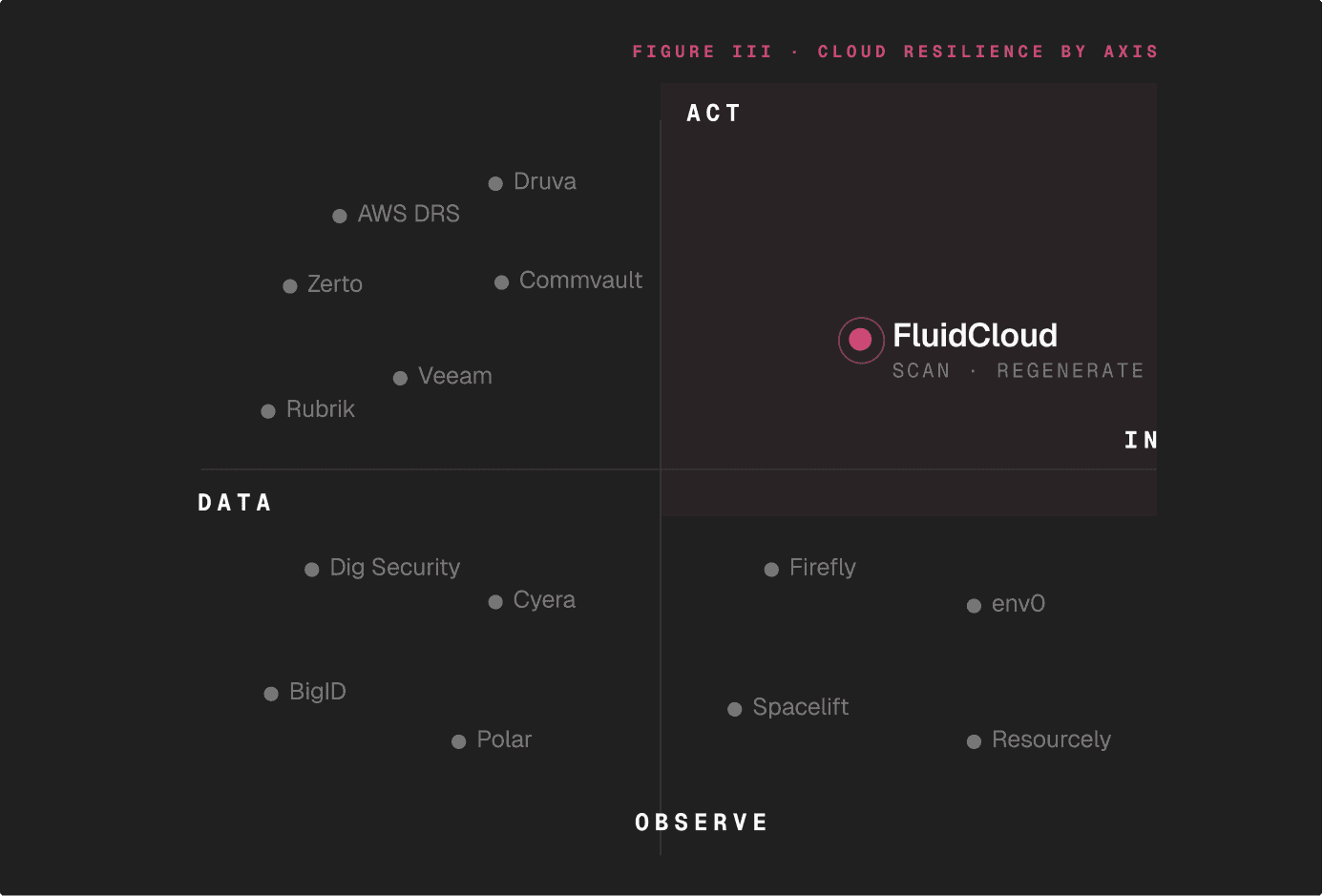
FluidCloud is a cloud portability platform that lets enterprises clone and migrate their entire environment across providers, accounts, or regions in minutes, with no manual rebuilds and zero downtime.
Overview
FluidCloud is a cloud portability platform that lets enterprises clone and migrate their entire environment across providers, accounts, or regions in minutes, with no manual rebuilds and zero downtime.
Overview
FluidCloud is a cloud portability platform that lets enterprises clone and migrate their entire environment across providers, accounts, or regions in minutes, with no manual rebuilds and zero downtime.
WHAT WE DID
01
Turning cloud infrastructure complexity into a clear enterprise pitch
02
A website that earns trust before the sales call
03
An enterprise visual standard that opens doors in cloud sales
04
Built beyond off-the-shelf to match FluidCloud's ambition
WHAT WE DID
01
Turning cloud infrastructure complexity into a clear enterprise pitch
02
A website that earns trust before the sales call
03
An enterprise visual standard that opens doors in cloud sales
04
Built beyond off-the-shelf to match FluidCloud's ambition
WHAT WE DID
01
Turning cloud infrastructure complexity into a clear enterprise pitch
02
A website that earns trust before the sales call
03
An enterprise visual standard that opens doors in cloud sales
04
Built beyond off-the-shelf to match FluidCloud's ambition


01
Product strategy
Turning cloud infrastructure complexity into a clear enterprise pitch
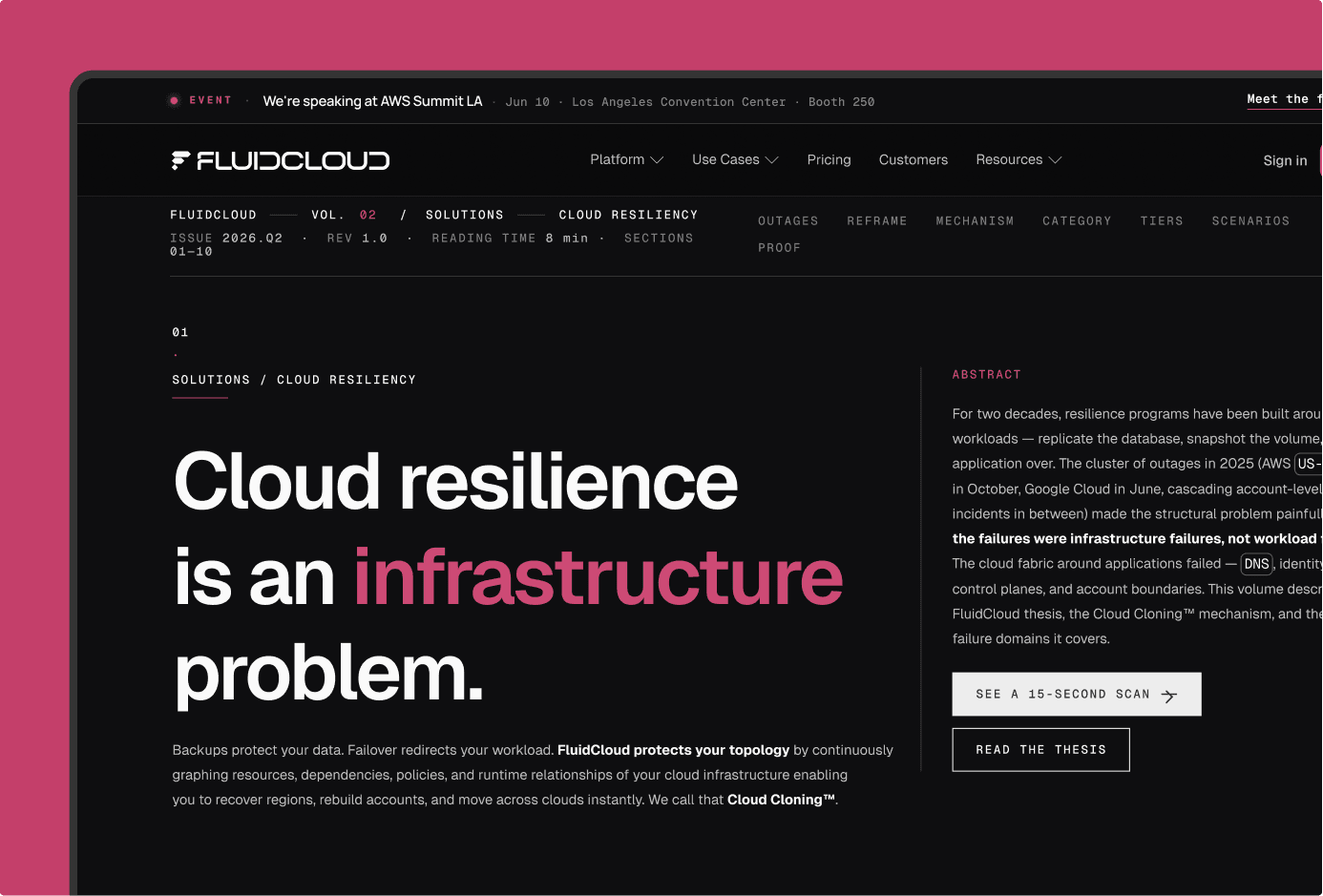
FluidCloud built technology that solves a real enterprise problem. But their website led with technical depth instead of business value. Engineering teams understood the product. The buyers who sign the checks didn't. We restructured the narrative around the outcome enterprises care about: clone, migrate, and restore entire cloud environments in minutes, with no downtime and no manual rebuilds. The website now leads with what FluidCloud does for the business, not how the technology works. Enterprise buyers reach the demo request with a clear understanding of the value, and the sales conversation starts from a stronger position.
01
Product strategy
Turning cloud infrastructure complexity into a clear enterprise pitch
FluidCloud built technology that solves a real enterprise problem. But their website led with technical depth instead of business value. Engineering teams understood the product. The buyers who sign the checks didn't. We restructured the narrative around the outcome enterprises care about: clone, migrate, and restore entire cloud environments in minutes, with no downtime and no manual rebuilds. The website now leads with what FluidCloud does for the business, not how the technology works. Enterprise buyers reach the demo request with a clear understanding of the value, and the sales conversation starts from a stronger position.
01
Product strategy
Turning cloud infrastructure complexity into a clear enterprise pitch
FluidCloud built technology that solves a real enterprise problem. But their website led with technical depth instead of business value. Engineering teams understood the product. The buyers who sign the checks didn't. We restructured the narrative around the outcome enterprises care about: clone, migrate, and restore entire cloud environments in minutes, with no downtime and no manual rebuilds. The website now leads with what FluidCloud does for the business, not how the technology works. Enterprise buyers reach the demo request with a clear understanding of the value, and the sales conversation starts from a stronger position.

02
website redesign
A website that earns trust before the sales call
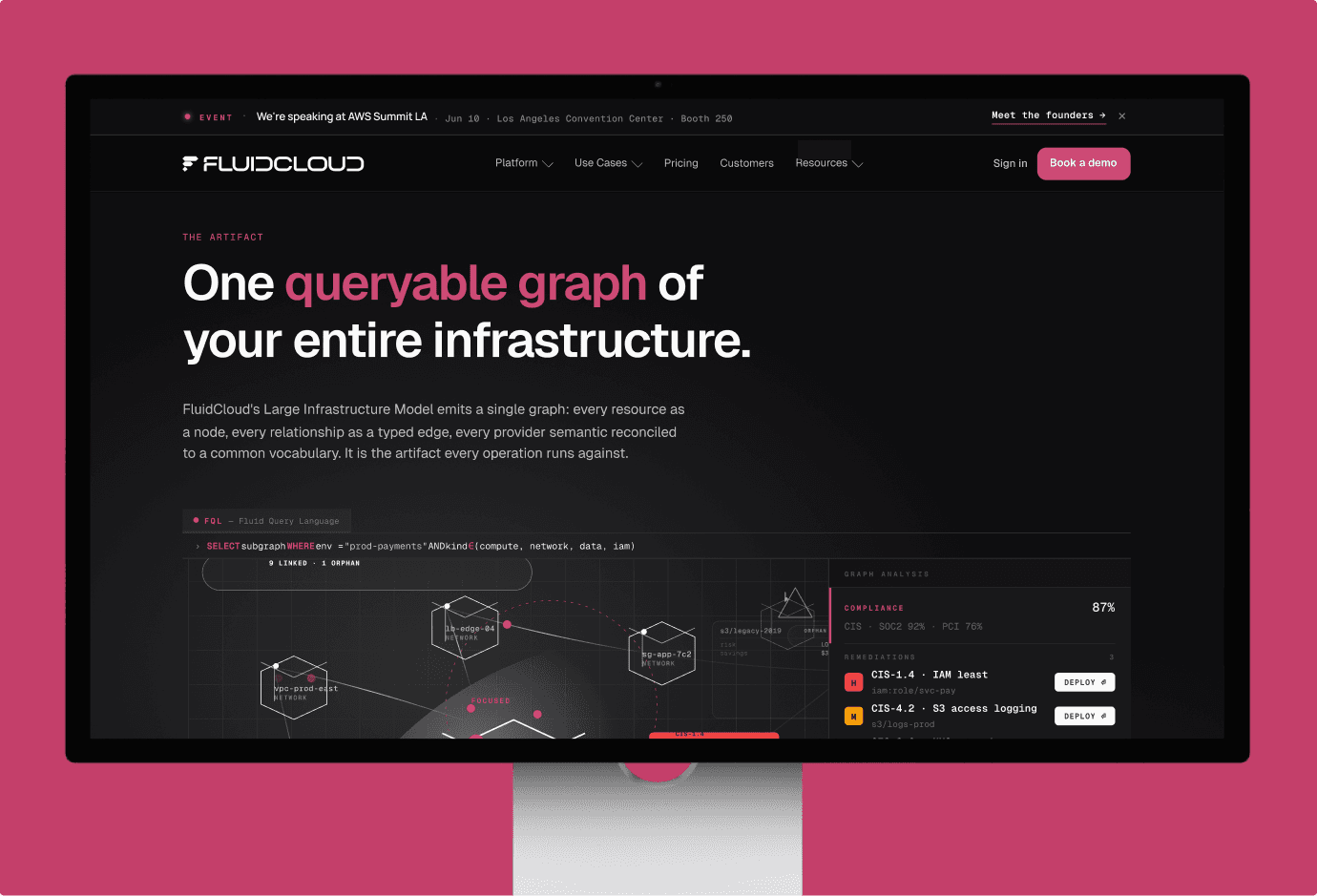
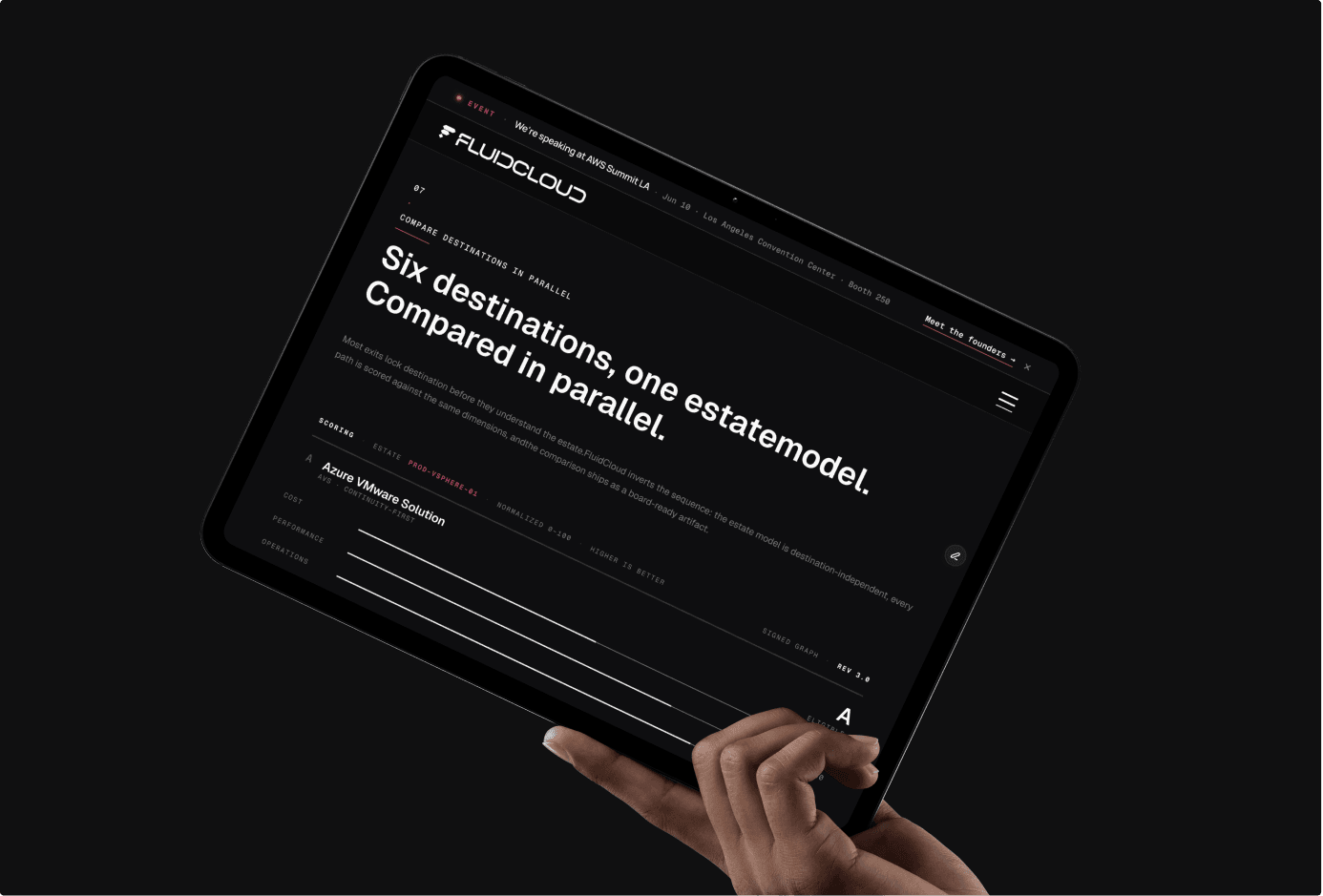
Enterprise buyers do their own research before they engage with sales. A website that feels generic or mismatched with the product's quality signals risk. For FluidCloud, selling infrastructure to enterprise teams, a weak site was losing deals before anyone picked up the phone. We built the website in Framer with the same precision FluidCloud brings to cloud infrastructure, creating a fast, credible site that matches the depth of the product. The website now works as a pre-sales asset. Enterprise buyers arrive at the demo already convinced of the product's quality, and the sales team starts conversations with less ground to cover.
02
website redesign
A website that earns trust before the sales call
Enterprise buyers do their own research before they engage with sales. A website that feels generic or mismatched with the product's quality signals risk. For FluidCloud, selling infrastructure to enterprise teams, a weak site was losing deals before anyone picked up the phone. We built the website in Framer with the same precision FluidCloud brings to cloud infrastructure, creating a fast, credible site that matches the depth of the product. The website now works as a pre-sales asset. Enterprise buyers arrive at the demo already convinced of the product's quality, and the sales team starts conversations with less ground to cover.
02
website redesign
A website that earns trust before the sales call
Enterprise buyers do their own research before they engage with sales. A website that feels generic or mismatched with the product's quality signals risk. For FluidCloud, selling infrastructure to enterprise teams, a weak site was losing deals before anyone picked up the phone. We built the website in Framer with the same precision FluidCloud brings to cloud infrastructure, creating a fast, credible site that matches the depth of the product. The website now works as a pre-sales asset. Enterprise buyers arrive at the demo already convinced of the product's quality, and the sales team starts conversations with less ground to cover.

03
visual identity
An enterprise visual standard that opens doors in cloud sales
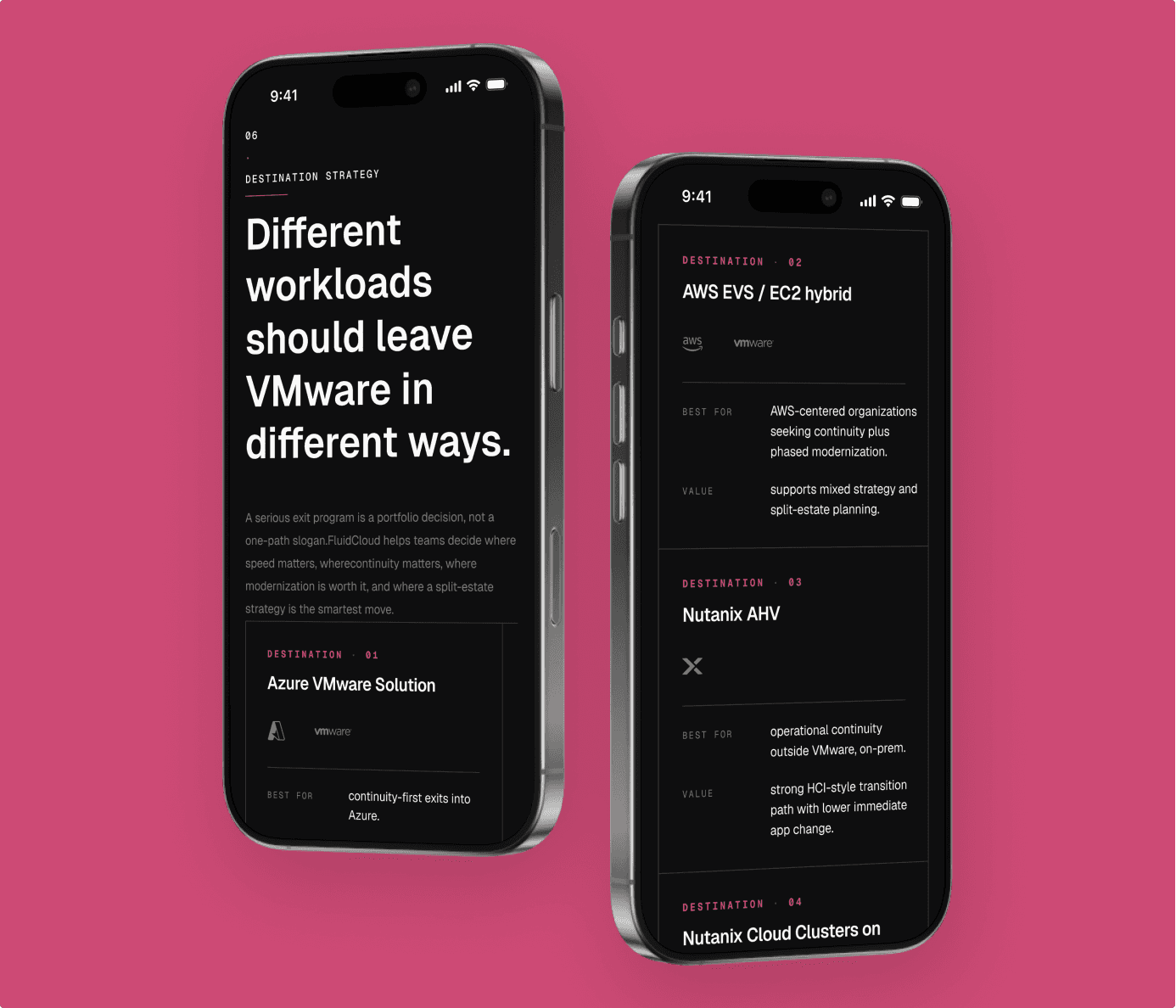
In enterprise cloud, buyers compare vendors before they engage. When FluidCloud's website looked like a startup template next to AWS or HashiCorp, it created a credibility gap the technology didn't deserve. Visual mismatches cost deals at the evaluation stage. We built a visual direction that positions FluidCloud as a serious infrastructure vendor, with the authority and technical credibility enterprise buyers expect from the category leaders. FluidCloud now looks like it belongs in the enterprise evaluation stack. The sales team can send the site to CISOs and infrastructure leads without hesitation.
03
visual identity
An enterprise visual standard that opens doors in cloud sales
In enterprise cloud, buyers compare vendors before they engage. When FluidCloud's website looked like a startup template next to AWS or HashiCorp, it created a credibility gap the technology didn't deserve. Visual mismatches cost deals at the evaluation stage. We built a visual direction that positions FluidCloud as a serious infrastructure vendor, with the authority and technical credibility enterprise buyers expect from the category leaders. FluidCloud now looks like it belongs in the enterprise evaluation stack. The sales team can send the site to CISOs and infrastructure leads without hesitation.
03
visual identity
An enterprise visual standard that opens doors in cloud sales
In enterprise cloud, buyers compare vendors before they engage. When FluidCloud's website looked like a startup template next to AWS or HashiCorp, it created a credibility gap the technology didn't deserve. Visual mismatches cost deals at the evaluation stage. We built a visual direction that positions FluidCloud as a serious infrastructure vendor, with the authority and technical credibility enterprise buyers expect from the category leaders. FluidCloud now looks like it belongs in the enterprise evaluation stack. The sales team can send the site to CISOs and infrastructure leads without hesitation.
04
design system
Built beyond off-the-shelf to match FluidCloud's ambition
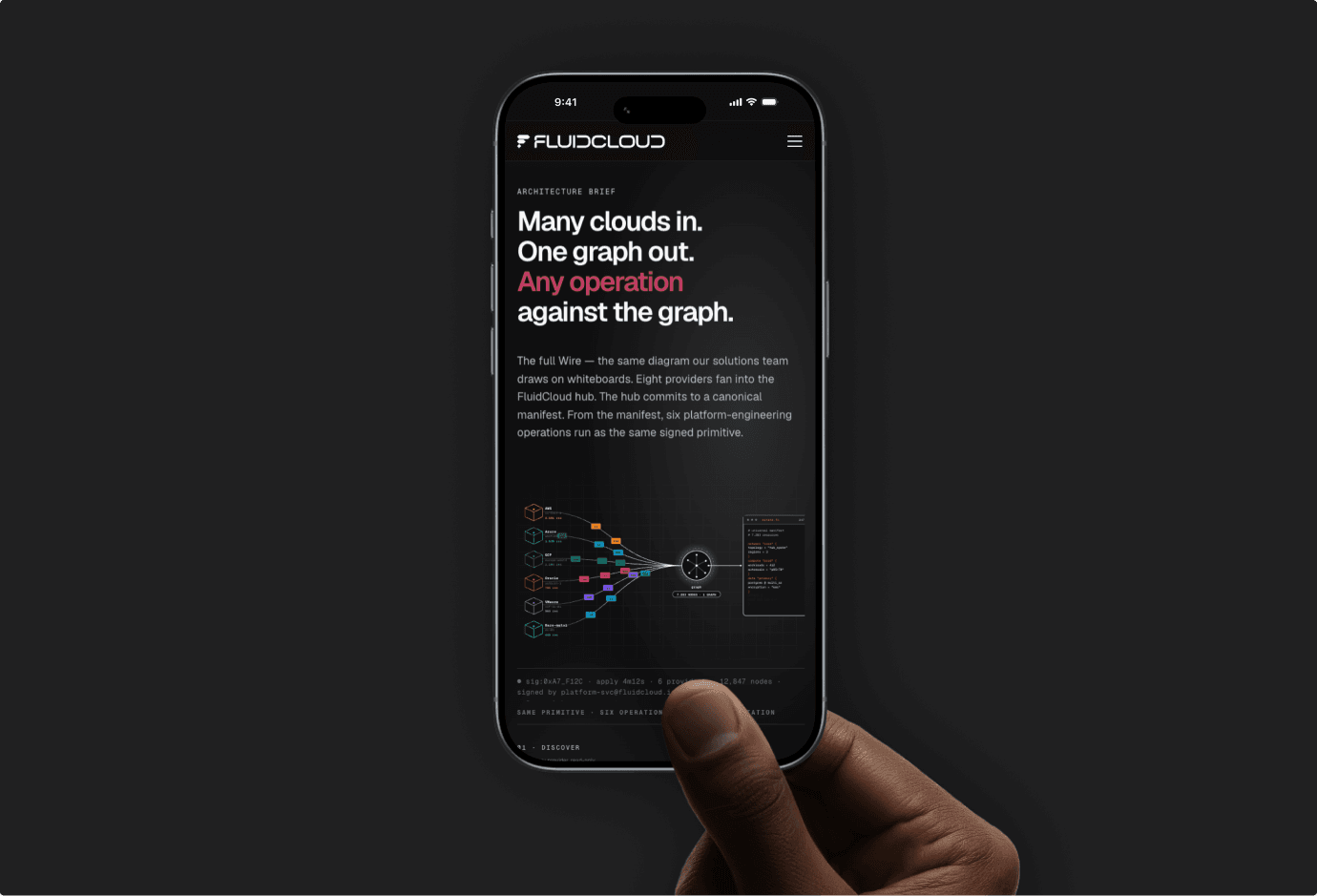
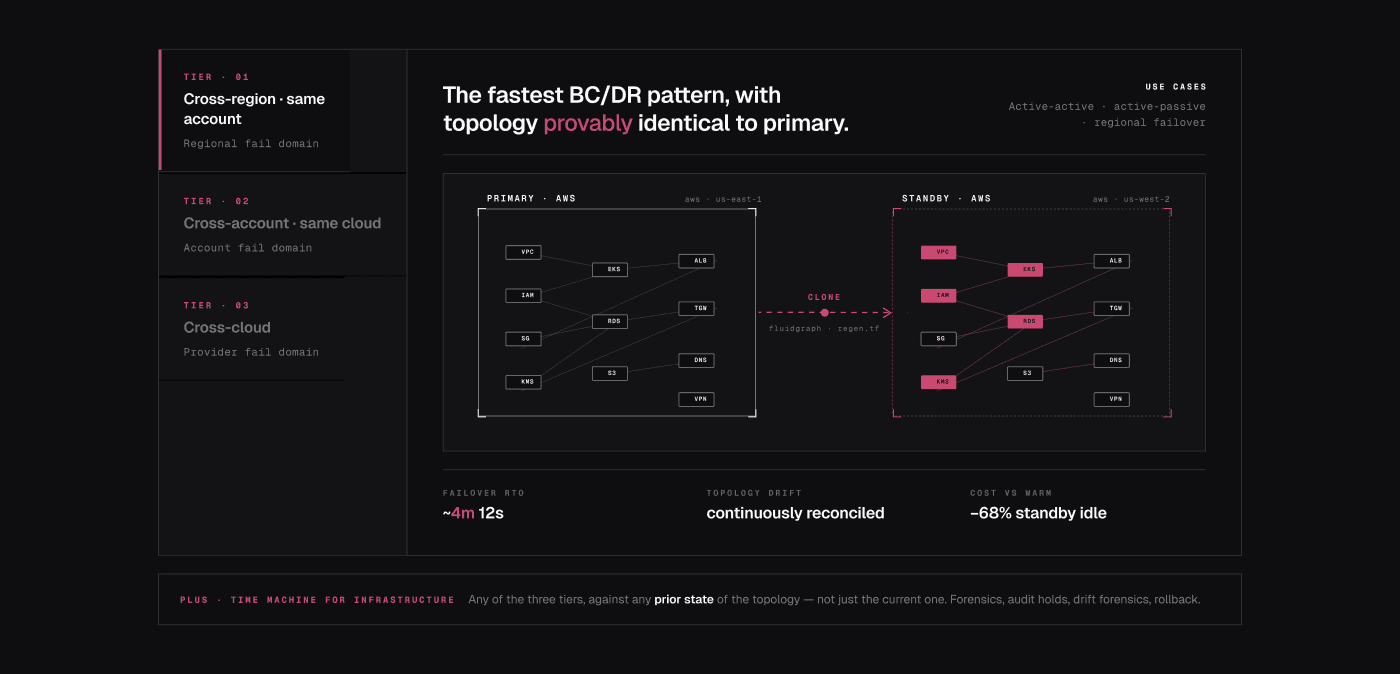
A website built from standard templates would have landed FluidCloud exactly where they didn't want to be: looking like every other cloud startup. The visual ambition required by enterprise positioning demanded technical execution that off-the-shelf tools couldn't deliver. We built custom code components in Framer that enabled the complex interactions and live data visualizations the site required, going beyond what standard tooling supports. The site achieves a level of technical sophistication that matches what FluidCloud built. Enterprise buyers encounter a product experience, not a marketing brochure, and that difference shows up in how seriously they take the conversation.
04
design system
Built beyond off-the-shelf to match FluidCloud's ambition
A website built from standard templates would have landed FluidCloud exactly where they didn't want to be: looking like every other cloud startup. The visual ambition required by enterprise positioning demanded technical execution that off-the-shelf tools couldn't deliver. We built custom code components in Framer that enabled the complex interactions and live data visualizations the site required, going beyond what standard tooling supports. The site achieves a level of technical sophistication that matches what FluidCloud built. Enterprise buyers encounter a product experience, not a marketing brochure, and that difference shows up in how seriously they take the conversation.
04
design system
Built beyond off-the-shelf to match FluidCloud's ambition
A website built from standard templates would have landed FluidCloud exactly where they didn't want to be: looking like every other cloud startup. The visual ambition required by enterprise positioning demanded technical execution that off-the-shelf tools couldn't deliver. We built custom code components in Framer that enabled the complex interactions and live data visualizations the site required, going beyond what standard tooling supports. The site achieves a level of technical sophistication that matches what FluidCloud built. Enterprise buyers encounter a product experience, not a marketing brochure, and that difference shows up in how seriously they take the conversation.
See more work from Foundey



See more work from Foundey
See more work from Foundey
Making the right product decisions starts here
Reach product market fit and hypergrowth faster
We analyze your product, identify what’s creating friction, and help you define the right priorities, what to fix and build next.
Making the right product decisions starts here
Reach product market fit and hypergrowth faster
We analyze your product, identify what’s creating friction, and help you define the right priorities, what to fix and build next.
Making the right product decisions starts here
Reach product market fit and hypergrowth faster
We analyze your product, identify what’s creating friction, and help you define the right priorities, what to fix and build next.